
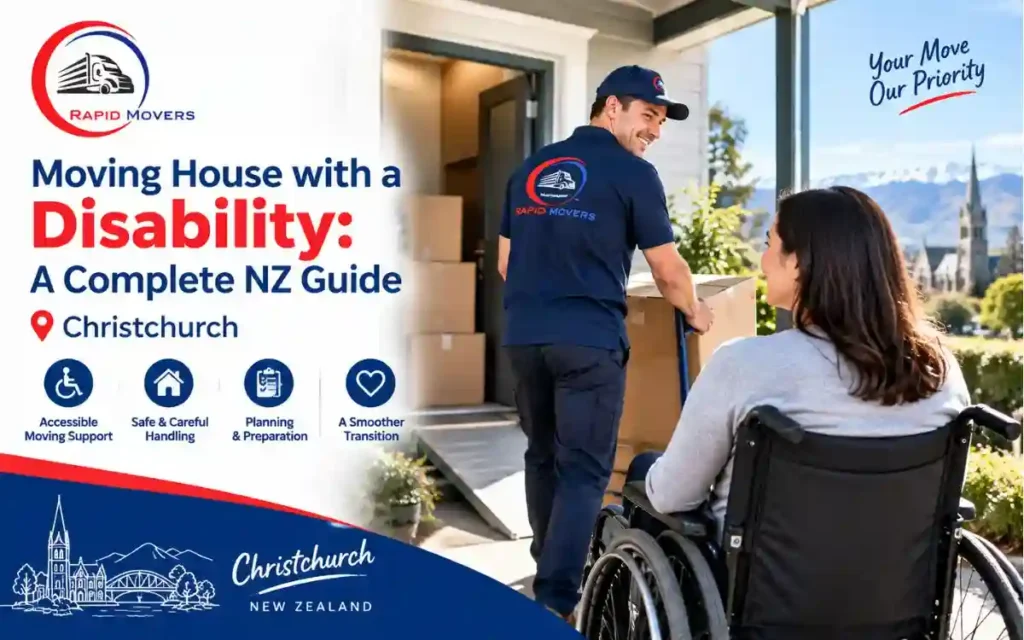
Moving house with a disability involves a layer of planning that most relocation guides never mention — from checking doorway widths to knowing your rights as a tenant. The good news is none of these extra steps need to derail your move. With the right preparation and the right support on moving day, relocation can still be a smooth, low-stress experience, not a source of anxiety. This guide walks you through everything you need to consider, from finding an accessible property to choosing movers who understand mobility needs.
What Makes a Home Genuinely Accessible?
Before you start searching through listings, it’s a good idea to make a list of accessibility features most important to you. Not all “accessible” listings are created equal, so knowing your non-negotiables going in can save you time and disappointment.
Common features worth prioritising include:
- A ground-floor property, or an apartment with reliable lift access
- At least one step-free or ramped entrance
- Wide hallways and doorways that fit mobility aids comfortably
- Kitchen benches and cabinets usable from a seated position
- Non-slip flooring and step-free shower access
- Nearby parking with minimal distance to the front door
Accessibility also varies by region. Cities with flatter terrain and fewer hillside suburbs — such as Christchurch, Hamilton and parts of Auckland — tend to be easier to navigate for wheelchair users and people with limited mobility, while hillier cities like Wellington can be more demanding even when individual homes are well designed.
Table: NZ Cities at a Glance for Accessibility
| City | Terrain | Public Transport Accessibility | General Notes |
| Christchurch | Mostly flat | Good, wide streets | Popular pick for wheelchair users |
| Hamilton | Mostly flat | Moderate | Fewer hills, easier day-to-day navigation |
| Auckland | Mixed | Good in central areas | Varies a lot by suburb — check locally |
| Wellington | Hilly | Good on flat routes, harder on hillside suburbs | Strong transport, but terrain can be a barrier |
| Tauranga | Mostly flat | Moderate | Growing accessible housing stock |
Use this as a starting point, not a final answer — accessibility can vary street by street, so always check the specific property and suburb.
Assessing a Property Before You Commit
Photos and floor plans only tell part of the story. Once you’ve shortlisted a property, take your own measurements where possible, including:
- Hallway and doorway widths
- Living and bedroom floor space
- Bathroom and toilet accessibility
- Turning space around beds and furniture
This is also the point to think about your support needs, not just physical layout. If you attend regular medical appointments, a location closer to those services can meaningfully cut down travel time. Similarly, if you rely on public transport rather than driving, proximity to an accessible bus or train route is worth weighing just as heavily as the home itself.
Know Your Rights as a Tenant or Buyer
Knowing your legal position makes the search process a whole lot less stressful. The Human Rights Act 1993 protects you from a landlord refusing to rent to you because of your disability, or unreasonable conditions being placed on the tenancy, or discriminatory questions being asked, such as for your medical records.
Of course, landlords don’t usually have to make a property accessible unless they want to. But as a tenant you can ask for reasonable changes such as grab rails or a ramp, at your own cost. You will usually need the landlord’s written permission to make changes. They can ask you to reinstate the property when you move out.
Disability advocacy organisations in New Zealand can help you have these conversations and know what’s
Where to Look for Accessible Housing
A few starting points make the search easier:
- General property listings (like Trade Me) remain the largest source of rentals and homes for sale, so it’s worth filtering specifically for accessibility features.
- Social housing providers often list homes that have already been modified for accessibility, particularly in main centres.
- Disability support organisations can point you toward funding for home modifications or supported living options if that’s part of your search.
Preparing for Moving Day
A little groundwork before the truck arrives makes an enormous difference:
- Loop in your support network. Moving is demanding under normal circumstances, and even more so when you’re also managing mobility or health needs — don’t hesitate to ask friends, family or support workers for help.
- Declutter early. Fewer items to pack means less physical strain, lower moving costs and a faster unpack. Sell, donate or dispose of what you no longer need before boxes start filling up.
- Pack essentials separately. Medication, mobility aids, important documents, and anything you’ll need immediately should travel with you rather than in the moving truck.
Your Accessible Moving Checklist
It’s easy to forget the small stuff when there’s already a lot on your plate. This checklist is built specifically around the extra considerations that come with moving when you have a disability — not just the usual “get boxes” advice.
4–6 weeks before moving day
- Confirm your new home’s accessibility features in person, not just from photos
- Book your moving company early — accessible moves often need extra time and hands
- Start requesting any records you’ll need transferred (GP, specialist, support services)
- Order any packing supplies suited to mobility equipment (padded covers, straps, custom boxes)
2–3 weeks before
- Begin decluttering room by room, so you’re not rushing near the end
- Label boxes clearly with which room they belong in — this saves your energy on unpacking day
- Arrange transport for anything requiring special handling, like a hospital bed, hoist, or wheelchair
- Let your support network know the moving date and ask who’s available to help
1 week before
- Pack a “first day” bag with medication, chargers, toiletries, and anything you use daily
- Confirm parking access at both properties for the moving truck
- Double-check accessible entry points are clear of obstacles for moving day
- Reconfirm arrival time with your movers so you can plan rest breaks around it
On moving day
- Keep essentials (meds, mobility aids, documents) with you at all times — don’t let them go on the truck
- Point out fragile or specialised equipment to the moving team before they start
- Take breaks when you need them; there’s no prize for rushing
- Do a final walkthrough of the old home before you leave
First day in your new home
- Set up your bedroom and bathroom first — the two rooms you’ll need working straight away
- Test accessibility features (shower, ramps, door widths) now that furniture is in
- Unpack medical and mobility items before anything else
- Give yourself permission to leave the rest for tomorrow
Why Hiring Professional Movers Makes a Real Difference
This is often the single biggest lever for reducing moving-day stress. A disability-friendly moving company can handle the physical demands of the move — packing, lifting, transport and unpacking — so you’re not putting your body or your mobility aids at risk.
When comparing movers, look for a team that can:
- Safely handle specialised equipment such as wheelchairs, lift chairs, ramps and mobility scooters
- Offer full unpacking at your new address, not just drop-off
- Communicate clearly about timing, so you can plan rest breaks or medication schedules around the move
- Work around your accessibility needs rather than expecting you to adapt to a standard moving process
At Rapid Movers, our teams are experienced in exactly this kind of considerate, careful relocation — from wrapping delicate mobility equipment to making sure your new home is genuinely liveable the moment you walk in. If moving day is the part of this process you’re dreading most, that’s the part we’re built to take off your hands.
Frequently Asked Questions
Is it hard to find accessible rental housing in New Zealand?
Honestly, it can take a bit longer than a standard house hunt — but it’s not as limited as people expect. Combining regular listing sites with social housing providers and disability organisations usually turns up more options than searching one place alone.
Can a landlord refuse to rent to me because of my disability?
No, and this one’s black and white. Under the Human Rights Act 1993, a landlord can’t turn you down, add unfair conditions, or ask invasive questions (like requesting medical records) because of a disability.
Do I have to pay for accessibility modifications myself?
In most cases, yes — unless your landlord agrees to cover it. You’re allowed to request reasonable changes like grab rails or a ramp at your own cost, but you’ll need permission first, and you may have to remove them when your tenancy ends.
What should I look for in a moving company if I have a disability?
Experience with mobility equipment is the big one — think wheelchairs, hospital beds, hoists, ramps. Beyond that, look for a company that offers full unpacking, communicates clearly about timing, and treats your pace as normal rather than an inconvenience.
How far in advance should I start planning an accessible move?
A few weeks at minimum, though two months gives you real breathing room. Accessible properties can take longer to find, and there’s more coordination involved — from checking a home in person to arranging the right kind of moving support.
Can I ask my movers to be extra careful with medical or mobility equipment?
Absolutely, and you should. A good moving company will want to know in advance what needs special handling — whether that’s a power wheelchair, a hoist, or anything else that isn’t a standard piece of furniture.
What if I need to take breaks during the move because of fatigue or pain?
That’s completely normal, and it shouldn’t slow things down as much as you might think. Let your movers know ahead of time; most experienced teams are used to working around this and will pace the job accordingly.
Is there financial support available for accessible moves in New Zealand?
Some disability support organisations offer funding toward home modifications or supported living costs, though this varies by situation. It’s worth reaching out to a support organisation directly, since eligibility depends on individual circumstances.
Should I visit a property in person before signing anything?
If you can, yes — photos and floor plans don’t always capture real-world details like door swing, threshold height, or how tight a turn actually is. An in-person visit (or asking someone to check on your behalf) can save a lot of hassle later.
What’s the one thing people forget most often when moving with a disability?
Packing their “first day” bag. It sounds small, but having medication, mobility aids, and daily essentials within reach — rather than buried in a box somewhere — makes the first night in a new home so much easier.
Ready for a Stress-Free Move?
Moving house with a disability is entirely manageable with the right preparation — and the right team behind you. Rapid Movers offers careful, considerate moving support across New Zealand, built around your needs rather than a one-size-fits-all process. Get in touch for a quote and let us handle the heavy lifting.
